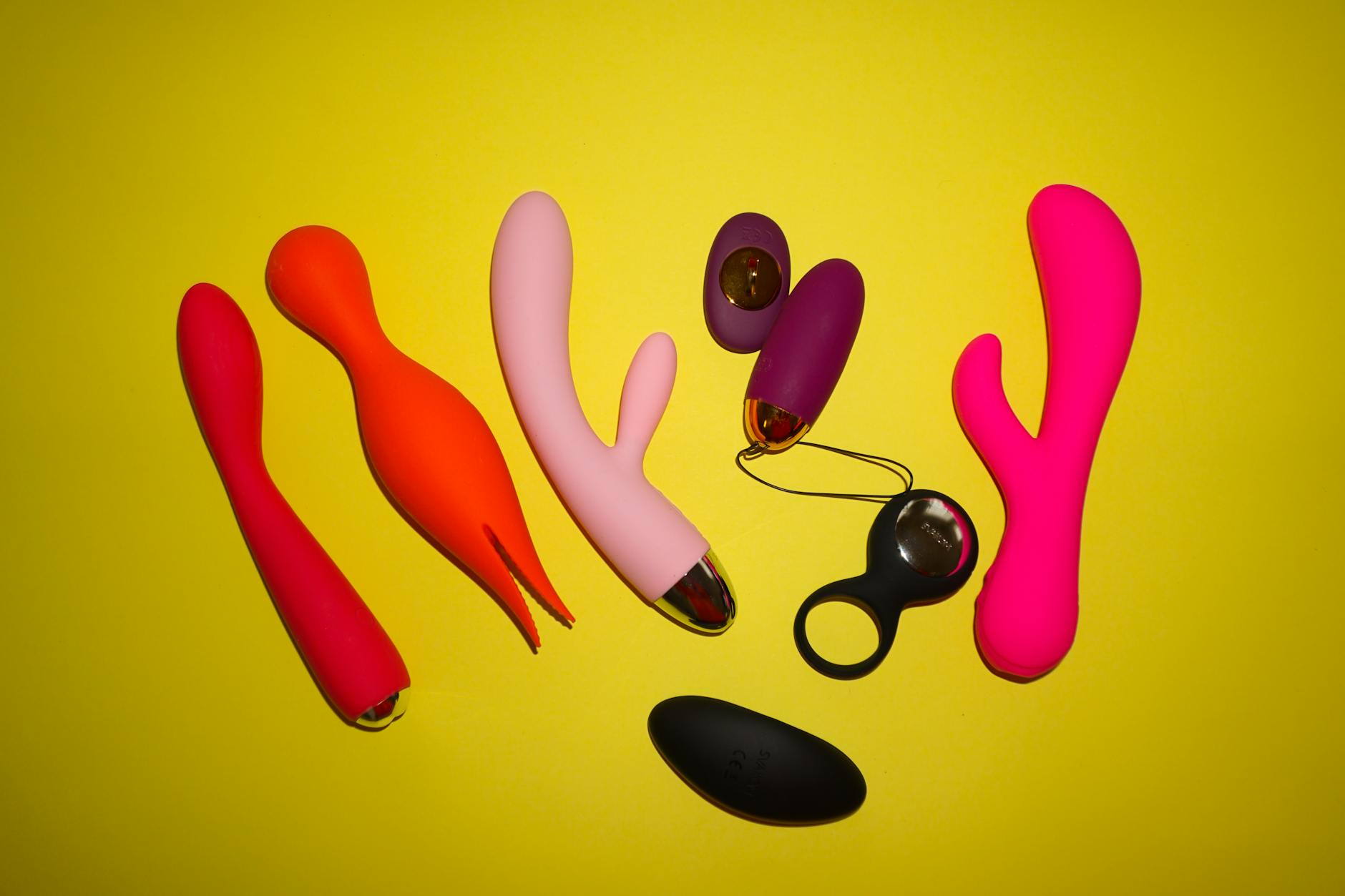
When pleasure stops feeling like pleasure
Let's be real. Sometimes sex becomes mechanical. You're present, physically, but your brain checked out three minutes in. Your partner touches you and it registers as touch, but not as pleasure. You go through the motions because that's what partners do, and by the end you're mostly just relieved it's over.
This isn't laziness. This isn't disinterest in your partner. This is disconnection, and it happens to almost everyone at some point.
Why intimacy goes numb
When pleasure becomes routine, two things usually happen first. The novelty disappears. Your nervous system stops registering familiar touch as new or interesting, so stimulation that once felt electric now registers as "fine." At the same time, your brain is often somewhere else entirely. You're thinking about work emails, the grocery list, whether you remembered to pay that bill.
That cognitive split is the real culprit. You can't feel pleasure in your body if your mind isn't there.
But there's a second layer too. Long-term partners develop predictable patterns. The same rhythm, the same pressure, the same sequence every time. Predictability is stabilizing for relationships, but it's also the enemy of sensation. Your brain learns the pattern and stops paying attention.
Add stress, life transitions, or the simple wear of long-term partnership, and you end up here. Present but absent. Going through it but not feeling it.
How a lemon vibrator interrupts the pattern
A good clitoral vibrator like the Lem serves a very specific purpose in this situation. It introduces an element that's genuinely different from what your body has learned to expect.
The Lem uses suction rather than vibration, which means the sensation is fundamentally unlike fingers or a penis. Your nervous system can't autopilot through it because it hasn't built a predictable response pattern yet. That novelty forces attention. You have to be present to experience it properly because your body needs to learn this new input.
That moment of being forced back into your own body, back into sensation, is where reconnection starts.
Solo practice: rebuilding the foundation
Here's what I recommend to almost every client who feels disconnected from pleasure.
Start alone. Not as a way to avoid your partner, but as a way to rebuild your own nervous system's response to pleasure. Alone, there's no performance aspect. You're not thinking about your partner's experience or whether you're taking too long. You're just feeling.
Set aside 20 to 30 minutes. No phone, no background noise, no half-attention to the TV. Use the Lem on the lowest setting and spend the first five minutes just noticing what's happening. Not trying to come, not moving toward any particular goal. Just sensation mapping. What does this feel like? Where are you numb? Where are you sensitive? Where does your body want more attention?
Many people find that solo practice with a new tool reconnects them to their own pleasure in ways that partnered sex never does. You learn what your body wants when there's no one else's needs in the picture.
Introducing it with a partner
When you're ready to bring the Lem into partnered sex, timing matters.
Don't introduce it during the same routine that's been feeling mechanical. That just adds a toy to an existing dead pattern, which doesn't fix the real problem. Instead, use it as an intentional shift. You might say something like, "I want to try something different. Can we set aside some time and actually focus on this?"
That framing alone breaks the autopilot. You're signaling that this isn't routine sex. This is an experiment.
Start with you using it on yourself while your partner watches or is present. This gives you back the focus on your own sensation, while including them in the process. Many couples find this works better than the partner using the toy, because it centers your pleasure without the pressure of performing for someone else's technique.
After a few times, if it feels right, explore your partner using the Lem on you. The key is that your partner is doing something intentionally different, with focus, rather than on autopilot.
The conversation that matters more than the toy
Here's what most couples miss. The Lem itself isn't the fix. The fix is that it creates permission to do something different.
The real work happens in talking about why pleasure went numb in the first place. Was it work stress? Relationship tension? Loss of novelty? A slow erosion of emotional intimacy that made physical intimacy feel hollow?
You need to name that, together. "Sex has felt like routine to me" or "I've felt checked out" or "I think we've both been on autopilot." That conversation is uncomfortable, but it's the one that actually reconnects you.
A tool like a lemon clitoral vibrator can help rebuild sensation, but sensation without emotional connection will feel good for a night and then you're back to mechanical again. You have to address both.
When disconnection is a sign of something deeper
If pleasure has been numb for months, or if reconnecting feels impossible even with effort and novelty, that might be a sign of something else. Depression, burnout, relationship resentment, past trauma, hormonal shifts. Those need real attention, often professional attention.
A vibrator helps when disconnection is about pattern and novelty. It doesn't help when disconnection is a symptom of something that needs actual healing. Know the difference.
Rebuilding pleasure is a choice
Most of my clients expect reconnection to happen by accident. Like if they just buy a new toy or try a new position, the spark will suddenly reignite.
It doesn't work that way. Reconnection is intentional. You have to decide that your pleasure matters enough to pay attention to it. You have to carve out time. You have to have uncomfortable conversations. You have to be willing to feel awkward or silly trying something new.
But here's the thing. On the other side of that intentionality is the possibility of pleasure that's actually yours again. Not routine. Not mechanical. Real.
The lemon vibrator is just the tool. You're the one who decides whether to use it.
Frequently asked questions
How long does it take to feel reconnected to pleasure after it goes numb?
It depends on how long the numbness has been there and what caused it. If it's been a few weeks of routine and stress, you might feel reconnected within two to four weeks of intentional practice. If it's been a year or more of disconnection, you might be looking at two to three months of consistent effort. Solo practice with a new tool like the Lem usually helps accelerate things because it gives your nervous system something genuinely novel to learn.
Can using a lemon vibrator alone make pleasure feel less mechanical?
Yes, absolutely. Solo use is actually where most of the reconnection happens. When you're alone with the Lem, you can focus entirely on sensation without performance pressure. That focus is what rebuilds the neural pathways that make pleasure feel real instead of automatic. Many people find that solo reconnection with a tool makes partnered sex feel better too, just because you remember what real sensation feels like.
What if my partner thinks using a toy means they're not enough?
This is real, and it needs a real conversation. The honest answer is that a lemon vibrator isn't a replacement for your partner's touch. It's a different sensation, one that your nervous system needs novelty from. You might say something like, "This isn't about you not being enough. It's about my nervous system getting stuck in a pattern, and I need something different to break out of it." If your partner struggles with this, that might be worth exploring together, maybe even with a therapist. The resistance often points to something deeper than the toy itself.
Is it normal for pleasure to feel disconnected in long-term relationships?
Yes. This is one of the most common things I hear about in my practice. The longer you're with someone, the more your nervous system learns to predict their touch, and the less novel it becomes. Add stress, life changes, or just the daily grind of partnership, and pleasure can feel mechanical. It's completely normal, and it's also completely fixable if you're willing to put in the intentional effort.
Can a lemon clitoral vibrator help if I feel disconnected because of relationship issues?
It can help with the sensation part, but it won't fix the underlying relationship problem. If you're disconnected because you and your partner are distant or in conflict, a new toy might actually highlight that absence rather than fix it. The tool works best when the relationship foundation is okay but the pleasure has just gone routine. If there's real relationship tension, that needs to be addressed first.
What's the difference between feeling numb and having low libido?
Numbness is when you're not feeling sensation in your body, even though you might be willing and interested in sex. Low libido is when you don't want sex at all. They're related sometimes, but not always. Numbness responds really well to novelty and reconnection work. Low libido is more complex and usually needs a conversation about what's driving the lack of desire. A lemon vibrator helps with numbness more than with libido itself.
Your pleasure is worth paying attention to
When sex becomes mechanical, the temptation is to just accept it as normal. This is what long-term partnership looks like, right? Familiar. Comfortable. Routine.
Maybe. But comfortable doesn't have to mean numb. You can have stability and connection without sacrificing sensation.
It takes intention. It takes sometimes awkward conversations. It takes willingness to try something different, even when different feels vulnerable.
But on the other side of that is the possibility of pleasure that actually feels like pleasure again. Not something you're checking off a list. Something you're actually present for.
That's worth the effort.
If you're looking for guidance on how to start this conversation with your partner or need more personalized advice on rebuilding intimacy, reach out to Hello Nancy Lemon. We're here to help.