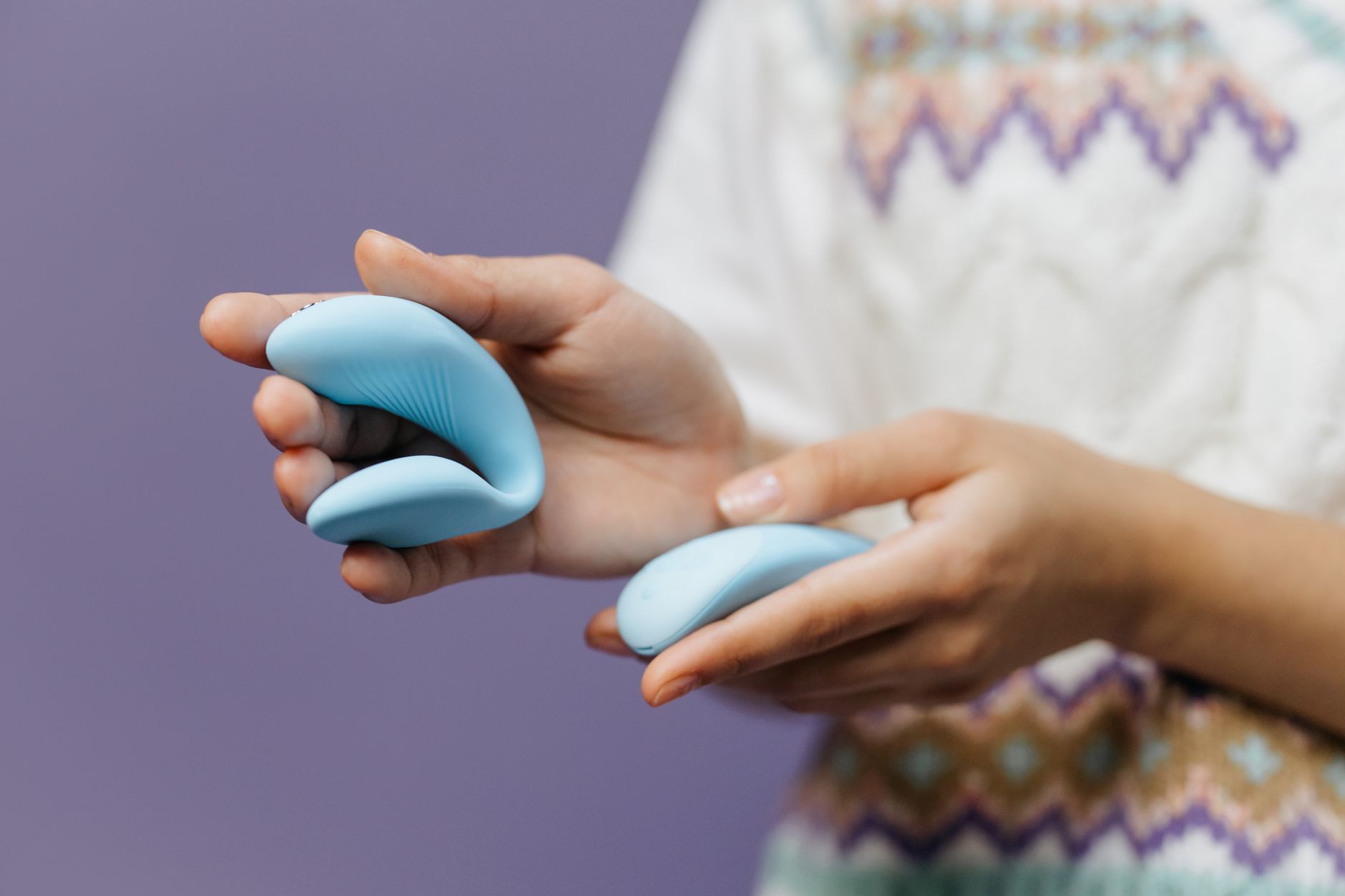
How to Use a Lemon Clitoral Vibrator During Perimenopause and Hormonal Changes
Perimenopause is the plot twist nobody warns you about. Your body feels like it's running on a firmware update that keeps rolling back. One week arousal builds quickly. The next week it takes 20 minutes to feel anything at all. Your clitoris might feel too sensitive on day 10 of your cycle and practically numb on day 22.
This isn't you breaking. This is your hormones doing their thing, and your pleasure responding in real time.
Here's what I see in my practice: people in perimenopause abandon pleasure tools because they assume something's wrong. "It doesn't feel the same," they tell me. "It used to work." Then they stop using anything, which means they miss the window where a different approach, with different settings and timing, would absolutely transform the experience.
A lemon clitoral vibrator, specifically one like the Lem, works remarkably well during hormonal transitions. Not because it's magic. Because it's designed around sensitivity, which is exactly what changes. Here's how to use it when your hormones are all over the place.
What Perimenopause Actually Does to Sensation
Let's start with the physiology. Perimenopause typically spans 4-10 years before your last period. During this time, estrogen doesn't drop steadily. It surges, crashes, and lurches around. That hormonal chaos directly affects how your clitoris and vulva respond to touch.
Estrogen maintains tissue thickness and blood flow. When it spikes, sensation becomes sharper. Tissues swell slightly, nerve endings become more responsive, and arousal can feel almost electric. When it bottoms out, tissues thin, lubrication drops, and that same vibration that felt perfect last week now feels too intense or weirdly distant.
Your baseline sensitivity literally changes every few days. This is why the vibrator settings you loved at 35 might feel completely wrong at 45. The toy didn't change. Your body did.
Why Lemon Vibrators Handle Hormonal Fluctuations Better
Most traditional vibrators use consistent vertical vibration. High intensity, medium intensity, low intensity. But they don't account for the fact that during perimenopause, your clitoris isn't asking for more or less of the same thing. It's asking for a completely different type of stimulation on different days.
Air-suction clitoral vibrators like the Lem work differently. Instead of direct mechanical vibration, they use gentle suction. This matters enormously during hormonal shifts because suction is less dependent on tissue thickness. A suction stimulator creates a seal and applies subtle pressure that works whether your tissues are fully engorged or slightly thinner.
When estrogen is high and your tissues feel swollen, suction feels luxurious. When estrogen dips and tissues are thinner, that same suction pressure is easier on sensitive skin and doesn't require the kind of direct friction that might feel raw or irritating.
In practical terms, the Lem gives you one type of stimulation that adapts to your hormones automatically. You don't need three different toys for three different hormone states.
Mapping Your Cycle and Your Sensitivity
The first step is tracking when you feel what. I know that sounds tedious. It's not. You're collecting data about your own body, which is genuinely useful.
For two or three cycles, just note down in your phone or a notes app: what day of your cycle are you in, and when you tried the Lem, how did it feel. Rate the experience casually. Good. Fine. Uncomfortable. Too much. Weird.
You'll probably see a pattern. Most people in perimenopause feel their highest sensitivity during the follicular phase (days 1-14) and the lowest just before their period or in the luteal phase dip. Some people experience totally erratic patterns. That's still data.
Once you know your rhythm, you can front-load pleasure exploration on the days your body is more receptive. No shame in being strategic about this. This is just honoring your actual body instead of fighting it.
Setting Adjustments for Hormonal Phases
The Lem has several suction intensity levels. Here's how I recommend calibrating them to your cycle.
High-sensitivity days (follicular phase, days 1-8, or any time you feel particularly receptive): Start at pattern 1 or 2, which is the gentlest suction. Your clitoris is already amped up. You don't need to push hard. Going gentle actually often prolongs the experience because you're not overwhelming nerves that are already firing. Spend more time building from here. Go slow.
Middle-sensitivity days (mid-cycle, days 9-14): Patterns 2-4 are your sweet spot. Your tissues are full, arousal builds faster, and moderate suction feels satisfying without that electric-too-much feeling. This is often where you can explore more variation. Try moving the Lem slightly, changing positions, experimenting.
Lower-sensitivity days (luteal phase, premenstrual week): Start higher, around pattern 3-4, and you might need a bit more time. Your tissue is thinner and your nervous system is potentially more pessimistic (yes, that's real). Don't fight it. Just build slower, maybe with lubrication, and let the experience unfold.
Low-sensation days (if they happen): This is when water-based lubricant becomes your friend. Apply it generously around the clitoral area. Lubrication reduces the friction that might feel irritating on thin tissue and lets the suction work more smoothly. Also, extend warm-up time. What took 5 minutes on a high-estrogen day might take 15 minutes now. Budget that time.
Lubrication Matters More During Hormonal Flux
I'll be direct: water-based lubricant during perimenopause isn't optional. Your natural lubrication is genuinely more inconsistent right now.
Use a water-based lube like Aloe Cadabra or Good Clean Love. Apply it around the vulva and clitoral area before you start. The Lem doesn't require lubrication inside the cup itself, but having it on the surrounding tissue means the seal works more comfortably and the whole experience feels less dry or pulling.
One trick: warm the lube slightly between your fingers before applying. Cold lube on already-unpredictable skin can feel jarring. Warm lube feels more integrated, more like it's part of what's happening rather than something added on.
Timing, Warm-Up, and Permission
During perimenopause, arousal is less automatic. This isn't a flaw. It's just the new normal. Budget more time.
Set aside 20-30 minutes when you can. Not rushed, not checking your phone every 30 seconds. Your parasympathetic nervous system needs to be offline for pleasure to work, and perimenopause makes that harder because stress hormones are already a bit elevated.
Warm up before you even touch the Lem. Touch yourself. Fantasize. Read something. Get your brain engaged for 5-10 minutes. Then introduce the Lem at a lower setting. The goal is building arousal in stages, not jumping straight to intensity.
And here's the part nobody says: give yourself permission to stop if it's not working. "Not working today" doesn't mean something's wrong with you or the toy. It means your hormones are in a phase where pleasure just isn't accessible right now. That's fine. Some days you masturbate. Some days you don't. Both are valid.
Communication With a Partner During Hormonal Shifts
If you have a partner, tell them what's changing. Not in a confessional way. Just practically.
"My body feels different during different weeks. The Lem feels amazing right now, but in a few days it might feel too intense. That's not about you. That's estrogen talking."
Some partners want to participate. Some don't. Either way, if they understand that your pleasure isn't broken or rejecting them, the whole dynamic shifts. Partners often internalize changes in arousal or sensation. Naming the hormonal piece removes that misinterpretation.
If you want them involved, <a href="/blog/how-to-use-lemon-vibrator-with-your-partner-without-overthinking-it">here's how to use a lemon vibrator with your partner without overthinking it</a>. The principles there apply during hormonal flux too.
When to Check In With Your Doctor
Here's the distinction: normal perimenopause hormonal shifts will show a predictable pattern. Week 1 is more sensitive. Week 3 is less. It's cyclical.
If you're experiencing pain, sudden numbness that doesn't correspond to your cycle, or a complete inability to orgasm that doesn't improve with different settings and warm-up time, that's worth mentioning to a doctor.
Genitourinary syndrome from hormonal changes is real and treatable. So is reduced sensation from hormonal drops. Neither of these is permanent, and both respond well to interventions like topical estrogen, systemic hormone therapy, or other approaches.
What you're probably experiencing, though, is normal perimenopause variation. That's uncomfortable to manage, but it's not pathological. A lemon clitoral vibrator helps you work with those shifts instead of against them.
FAQ: Lemon Vibrators and Perimenopause
Does using a clitoral vibrator during perimenopause damage my nerves?
No. Clitoral nerves are robust. Using a lemon vibrator at appropriate settings doesn't cause nerve damage. What can cause irritation is using intense settings on thin tissue during a low-estrogen phase. That's why adjusting intensity based on your cycle matters. The vibrator itself is fine.
Can the Lem vibrator help if I'm numb during certain weeks?
Sometimes, yes. The suction design is particularly helpful for numbness because it engages nerves differently than traditional vibration. Start lower, use lubrication, budget more time. If numbness is severe or doesn't improve with adjustment, that's worth discussing with a menopause-focused doctor. Reduced sensation can respond to hormone therapy.
Will using a lemon vibrator make hormonal fluctuations worse?
No. Pleasure doesn't worsen hormone fluctuations. What it does do is give you an outlet that adapts to where your hormones actually are. That's honoring reality, not fighting it.
How often should I use my Lem during perimenopause?
As often as it feels good. Some people use it three times a week. Some use it twice a month. The pattern that matters is what makes you feel connected to pleasure. During perimenopause, consistency matters less than listening to when your body actually wants it. That might be more often during high-estrogen weeks and almost never during low weeks. That's completely normal.
Is it normal that my arousal speed changes so much?
Completely. Estrogen affects how quickly blood flows to your genitals and how responsive your nervous system feels. High estrogen, fast arousal. Lower estrogen, slower arousal. This is physiology, not something you're doing wrong.
Should I be using hormone therapy with a lemon vibrator?
They're not either-or. Some people use both. Some use one or the other. That's a conversation between you and a doctor who understands perimenopause. A lemon clitoral vibrator doesn't replace hormone therapy and doesn't make hormone therapy unnecessary. They're separate tools for different purposes.
The Plot Twist You Actually Need
Here's what I've learned after years of working with people navigating perimenopause: this phase isn't the beginning of the end of pleasure. It's a recalibration.
Your body is asking you to pay attention. To track. To adjust. To honor that sensitivity isn't stable right now. That feels like friction. But it's actually an invitation to get smarter about your own pleasure. People who get through perimenopause and come out the other side often report the most satisfying, intentional, deepest pleasure experiences of their lives. Because they stopped assuming one approach works always.
A lemon vibrator, specifically the Lem with its adjustable suction, handles that unpredictability beautifully. It's one tool that works across multiple hormone states without requiring you to buy three versions of the same toy.
Trust your body. Track what you notice. Adjust your approach. And give yourself permission to enjoy this in whatever form feels right on any given day.
Resources and Further Reading
If you're navigating perimenopause and want more context on how hormones shift sensation, the research on perimenopause and sexual function is solid and worth reviewing. The <a href="/blog/why-lemon-vibrators-feel-different-after-40-tissue-changes-explained">deeper science of how tissue changes after 40 actually work</a> might also help you understand what's happening in your body. And if hormonal shifts are affecting your relationship dynamics, <a href="/blog/how-to-use-lemon-vibrator-when-libido-drops-during-relationship-transitions">this piece on managing pleasure during relationship transitions</a> covers the partner angle more thoroughly.
For specific questions about your own perimenopause experience, reach out to us. We're here to help you figure out what works for your body right now.