Here's what nobody tells you about orgasm anxiety
You can orgasm alone. You can get close with a partner. But the moment you're aware that someone is watching, waiting, or invested in the outcome, your nervous system hits the brakes. Hard. This isn't weakness. It's not a reflection of how much you care or want them. It's performance anxiety, and it's one of the most common sexual friction points I see in couples therapy.
The irony is brutal. The closer you feel to someone, the higher the stakes feel. And the higher the stakes, the more impossible it becomes to let go enough to actually feel anything.
Why performance anxiety kills arousal
When you're worried about coming, your prefrontal cortex (the thinking brain) takes over. You're running a mental scoreboard. How long has it been? Is he getting tired? Does she think something's wrong with me? Am I taking too long? That internal narration floods your nervous system with cortisol and adrenaline. Your parasympathetic nervous system, the one that actually allows arousal and orgasm, gets shut down. You can't think your way into pleasure. You have to feel your way there. And you can't feel when you're performing.
The disconnect between solo and partnered pleasure
Lots of people can orgasm alone in 5 to 10 minutes but need 20, 30, or never reach it with a partner in the room. That gap isn't about your body being broken. It's about the difference between exploration and evaluation. When you're alone, you're curious. When someone's watching, you're being graded. Your autonomic nervous system knows the difference.
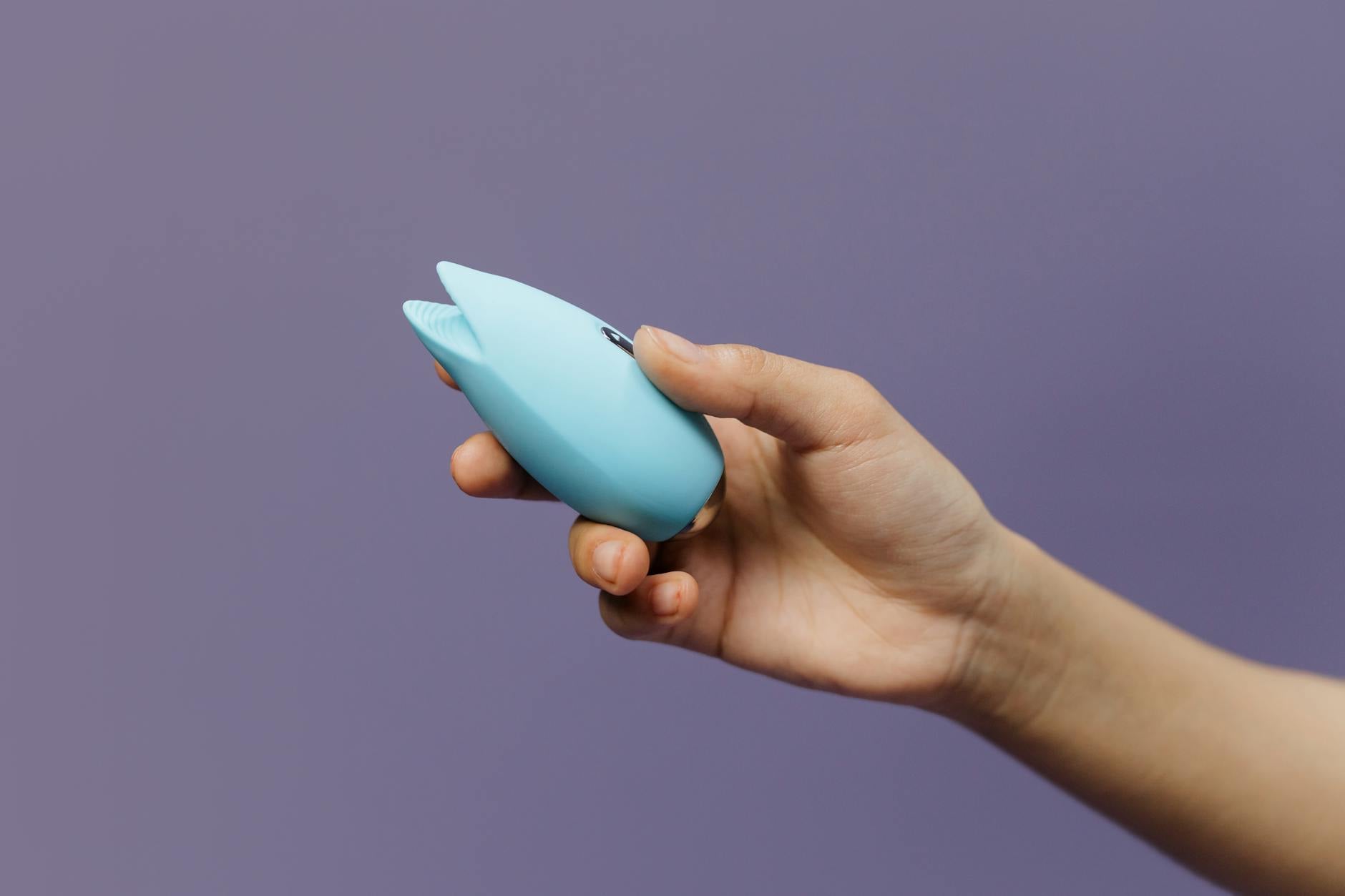
This is where a lemon vibrator changes things. Not because the device is magic. But because it gives you and your partner a shared language for what feels good, removes the performance pressure from both of you, and lets you rebuild trust in your own body.
How to rebuild solo pleasure first
If you can't come with your partner, the first step is not forcing the issue with them there. It's rebuilding your own baseline.
Set aside 20 minutes alone. No phone. No time limit. Get a lemon vibrator like the Lem and start at the lowest setting. The point isn't to chase an orgasm. The point is to notice what sensation does. Does pressure feel good? Does pattern work better than constant vibration? Where on the clitoris is most sensitive right now? Most people who struggle with partner orgasms have stopped asking their own body these questions.
Spend two to three solo sessions just exploring. Not coming. Just paying attention. This rewires your nervous system out of performance mode and back into curiosity mode.
When you're ready, involve your partner (but differently)
Once you've spent a few sessions reconnecting with your own pleasure, you can bring your partner in. But not the way you might think.
Tell them: "I'm going to use a clitoral vibrator like the Lem while you're here, and I'm not trying to come. I'm trying to show you what feels good." This reframes the entire dynamic. You're not performing for approval. You're collaborating on information. Their job is to watch, learn, and be present. Not to judge or fix.
Start with the vibrator at a low setting and narrate what's happening. "This feels really good right here." "If you touch me here while I use it, that intensifies things." You're building a feedback loop where your partner learns your body and you learn that you can trust them with vulnerability.
The pressure release that changes everything
Here's what happens when you introduce a lemon vibrator into partnered sex when orgasm has felt impossible. The device becomes the focus. Your partner isn't watching you to see if you're coming. They're watching the device and your body's response to it. That tiny shift in attention is huge. Your nervous system softens because the pressure point has moved.
Many couples find that once they've used a clitoral vibrator this way a few times, the anxiety lifts. Not because you suddenly became able to come. But because you stopped needing to. The goal shifted from "I have to orgasm" to "This feels good and I trust you here."
Sometimes an orgasm follows naturally. Sometimes it doesn't that session. And both are fine because the performance pressure is gone.
Building a sustainable rhythm
Once you've established that you can enjoy pleasure without coming, you can start exploring what actually gets you there with your partner.
For many people, a lemon clitoral vibrator becomes part of partnered sex permanently. You use it before sex. You use it during. Some partners hold it. Some you hold yourself while they're inside you or touching you elsewhere. The variability is the point. It's not a crutch. It's a tool that lets everyone relax.
The couples I work with who've moved past orgasm anxiety almost always say the same thing: "Once we stopped making the orgasm the goal, we started having better sex." A lemon vibrator doesn't solve that by itself. But it gives you a concrete way to practice it.
What if anxiety comes back
Sometimes performance pressure returns after a stressful period, a relationship shift, or just a bad experience. If that happens, don't panic. You have a map. Go back to solo exploration. Rebuild your own confidence. Then reintroduce your partner. You've done this before. You can do it again.
The conversation to have with your partner
None of this works without honesty. You have to tell your partner what's happening. "When I feel like I need to come, I panic. I stop feeling anything." That's a vulnerable thing to say. But it's also information they need. Most partners, once they understand the mechanism, become allies instead of the source of pressure.
You might say: "I want to try using a lemon vibrator together. Not because something's wrong with me, but because I think it'll help us both relax." Frame it as exploration, not repair.
If your partner responds defensively or makes it about them, that's a separate conversation that might benefit from a couples therapist. But most people, once they understand that orgasm anxiety isn't about them, become genuinely supportive.
When to keep exploring alone
Some people need longer to rebuild. And that's okay. You don't have to rush reintroduction. A lemon vibrator is an excellent tool for solo pleasure regardless. If you want to spend months just rediscovering what feels good alone, do that. Your partner benefit is already baked in because you'll be calmer, more confident, and less desperate when you do reconnect.
The goal isn't to perform. It's to pleasure. And sometimes that journey takes longer with someone else in the room. Honor that timeline.
FAQ
Will using a vibrator on my own make me dependent on it for pleasure?
No. In fact, the opposite is usually true. Once you've used a lemon vibrator to reconnect with sensation, many people find they're more responsive to touch overall. Your nervous system remembers what pleasure feels like. The device just helped you remember.
Should I hide the fact that I need a lemon vibrator to have pleasure with my partner?
No. Shame is what keeps the anxiety cycle running. Most people appreciate honesty over silence. Tell your partner you're working on this and that you want them involved in the solution.
What if my partner feels threatened by a lemon vibrator?
That's something to explore together or with a therapist. A clitoral vibrator isn't a replacement for a partner. It's a tool. But if your partner sees it that way, the real issue isn't the device. It's insecurity or a communication gap worth addressing.
How often should I use a lemon vibrator if I'm rebuilding after anxiety?
Start with once or twice a week. That's frequent enough to rebuild confidence but not so frequent that it feels like a performance or obligation. Listen to your body.
Can orgasm anxiety go away completely?
For most people, yes. Once your nervous system learns that you're safe and the pressure is off, arousal returns naturally. It might take a few weeks or months. But the pathway back is clear once you're not forcing it.
What if I still can't orgasm after trying a lemon vibrator with my partner?
Orgasm isn't the only measure of good sex. If pleasure, connection, and ease are there, that's success. If anxiety remains, consider talking to a therapist who specializes in sexual health. Sometimes past trauma or deeper relationship patterns need professional support.