Why Lemon Vibrator Orgasms Feel More Intense After 40
Let's be real. A lot of women notice something unexpected in their 40s and beyond: their orgasms get stronger, not weaker. And if they're using a lemon clitoral vibrator or suction toy, the intensity can feel almost shocking compared to what they remember from earlier decades.
This isn't a placebo, and it's not because you're finally relaxed enough to enjoy yourself (though that helps). There's actual neurobiology happening. Your body is different, your nerve sensitivity is different, and tools like the lemon vibrator work differently on your tissue than they did at 30.
The unexpected truth about aging and orgasm intensity
Here's what nobody tells you: orgasms don't have an expiration date. They have a transformation date. The research is clear. A 2021 study in the journal Maturitas found that women over 50 reported not only orgasms, but often more satisfying and longer-lasting ones than they did in their 30s and 40s. Why? Several converging reasons.
First, there's the neurological side. After 40, your brain's sensitivity to pleasure deepens. You've had enough experience with your own body that you're not running simultaneous background threads of self-consciousness, comparison, or performance anxiety. Your brain can allocate more processing power to sensation itself. That matters more than you'd think.
Second, your pelvic floor changes. Estrogen shifts mean the muscles supporting your pelvic region lose some tone, but that loosening can actually change how pleasure registers. It's not the same sensation. It's different, and for many people, it's more concentrated, more localized, and more intense.
Why clitoral vibrators work harder for you now
The clitoris is incredibly complex. Most of what you see is just the tip. The visible part is roughly the size of a pea, but the internal structure extends deep into the body, with branches and nerve networks that reach down several inches. As you age, a few things shift.
Estrogen depletion thins vaginal tissue, which sounds negative until you realize that thinner tissue is more sensitive to pressure and vibration. A lemon vibrator's suction mechanism doesn't rely on friction the way traditional vibrators do. Instead, it creates rhythmic pressure waves that stimulate the vast network of nerves without the mechanical wear that bothers thinner tissue.
Second, blood flow patterns change. While estrogen drops, many women find their clitoral tissue becomes more responsive to stimulation because the area has shifted from a wider, cushier structure to something more compact and nerve-dense. Your clitoris is actually smaller and tighter after 40. That concentration means more sensation per square millimeter.
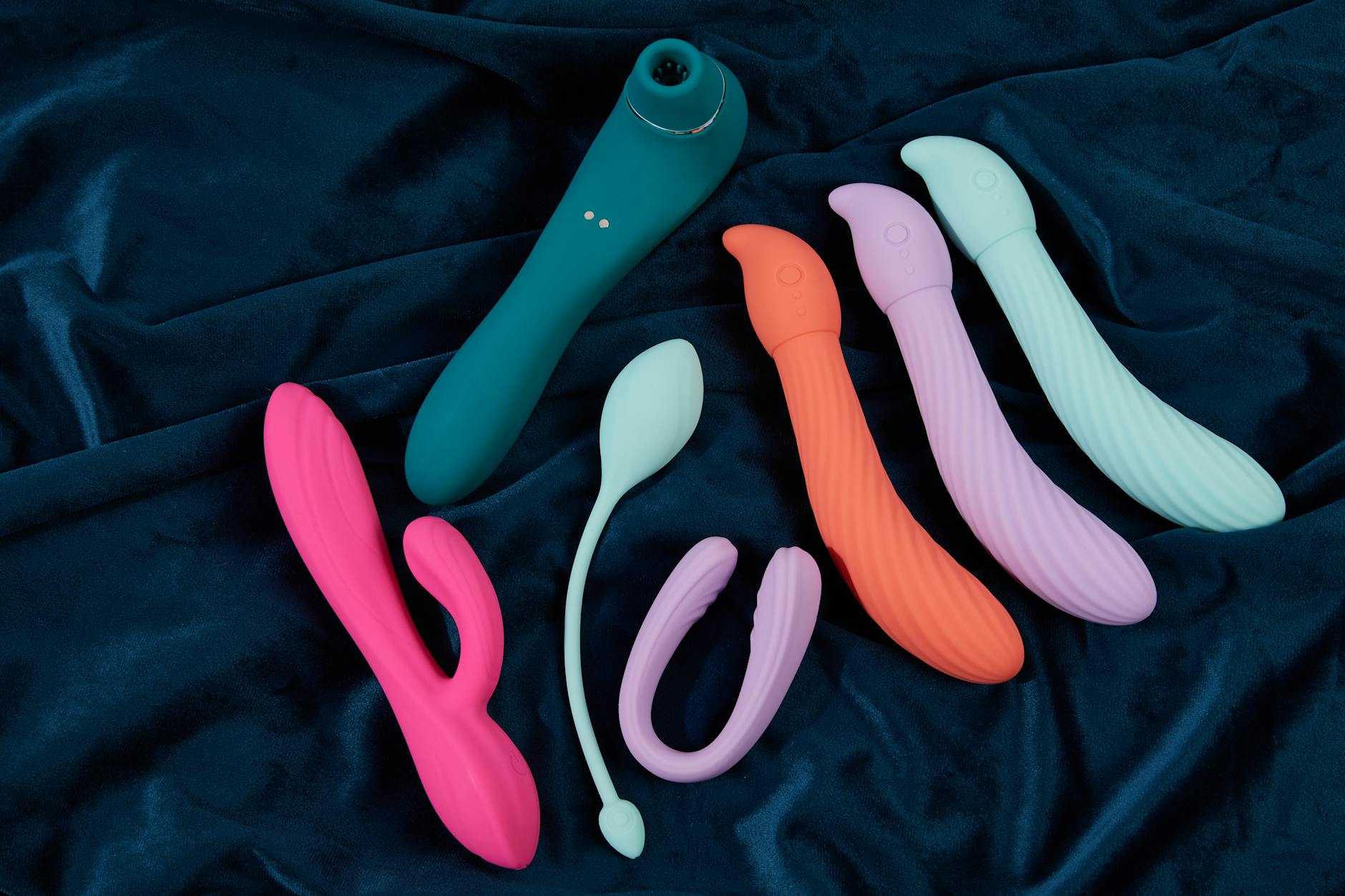
Photo by IFONNX Toys on Pexels
Why the lemon sucker works so well at this stage
A lemon clitoral vibrator uses air-pulse technology. Instead of vibrating side to side, it creates a gentle sucking sensation with subtle rhythmic pulses. This mechanism is genuinely different from traditional vibrators, and it hits harder after 40 for three specific reasons.
Reason one: It avoids direct friction. Traditional vibrators press and move across the tissue. For many women over 40, that feels intense in a way that's not entirely comfortable. A lemon vibrator's suction approach stimulates without that grinding sensation. It's gentler on the tissue while being more stimulating to the nerve network.
Reason two: The pressure wave mimics natural arousal. When you're aroused, blood engorges the clitoral tissue and surrounding structures. Suction vibrators recreate that engorgement sensation on demand. Your nervous system recognizes it as a signal that arousal is happening, which triggers a cascade of responses. It's like telling your body's pleasure system to wake up and pay attention.
Reason three: It works with your pelvic floor, not against it. As your pelvic floor tone changes, you become more aware of deep internal sensations. A lemon vibrator's action reaches deeper into the clitoral structure because suction creates negative pressure that pulls sensation inward, rather than vibration that stays on the surface.
The mental shift that amplifies everything
Here's the part nobody quantifies in studies, but every woman I've worked with reports: by 40, you stop performing. You're not having sex partly to get pregnant, prove your desirability, or meet some internal checklist of what you're supposed to want. You're having sex because you want the sensation, the connection, or the release.
That shift is massive. Your brain can process sensation more fully when it's not divided between "Am I doing this right?" and "Is this turning them on?" and "Do I look okay?" A lemon vibrator becomes genuinely pleasurable instead of a tool you're using correctly or incorrectly.
Meanwhile, you probably know your body better. You know what speeds you prefer. You know whether you need a long warm-up or can go fast from the start. You're not learning yourself for the first time. You're refining what you already know.
Common surprises after 40
When women switch to a lemon vibrator in their 40s, several things often happen that catch them off guard.
First, the sensation can feel stronger than expected. You might assume orgasms work the same way they always did, just maybe less intense. Often it's the opposite. The first time using suction technology at this life stage, women frequently report that the intensity is almost shocking. Your nervous system isn't used to this particular stimulus pattern, so it feels novelty-heightened.
Second, the refractory period shrinks. After one orgasm, you might want another almost immediately, whereas at 30 you might have needed a break. This is partly physiological (less fluctuation in hormones means less fatigue) and partly psychological (fewer distractions).
Third, the quality of the orgasm itself often shifts from broad and full-body to more concentrated and internal. You might notice less vaginal contraction and more deep clitoral intensity. That's not worse. It's just different.
What changes in your approach
If you're trying a lemon clitoral vibrator for the first time after 40, a few adjustments help.
Start lower on the intensity scale than you think you need. Your tissue is more sensitive, and your nervous system is more responsive. Pattern one or two on the vibrator is often plenty. You can always turn it up.
Budget time for warm-up differently. Your arousal might take longer to build in the first few minutes, but once it starts, it accelerates faster. Patience at the beginning pays off.
Use lubrication. Even if you don't feel like you need it, a water-based lube reduces any friction and makes the suction sensation feel even smoother. Your tissue isn't dry (that's a myth), but lube genuinely improves the experience of suction-based vibrators.
Pay attention to your pelvic floor. By 40, you're often more aware of tension you're holding in that area. Consciously relax it. Let the muscles soften. You can always engage them during orgasm, but loosening beforehand tends to make the waves of pleasure feel bigger.
The relationship angle
If you're partnered, this shift affects both of you. A partner used to your previous arousal pattern might assume something's changed in your desire for them. It hasn't. Your desire has changed in shape. It's often more focused and less easily disrupted by external factors.
The conversation that helps: "My body works differently now, and I like it. Here's what I'm enjoying." Not "I need things to be different," which can read as dissatisfaction, but "I'm discovering new things I like." It's an expansion, not a repair.
FAQ
Do lemon vibrators work differently for women over 40 compared to younger women?
Yes, substantially. Thinner tissue after 40 responds more intensely to suction and less comfortably to direct friction. The clitoral tissue is more compact and nerve-dense. A lemon vibrator's air-pulse mechanism works with these changes rather than against them, often delivering more intense sensation than traditional vibrators. Women frequently report that suction vibrators feel significantly stronger after 40 than they did at 30.
Can you have stronger orgasms after menopause?
Absolutely. Many women report their strongest orgasms happen post-menopause. The physiological shifts (thinner, more sensitive tissue and pelvic floor changes) combine with psychological factors (less performance anxiety, deeper self-knowledge, and fewer cognitive distractions). The intensity often increases even as the physical expression changes.
Why do clitoral vibrators feel more intense as you age?
Several reasons converge. Your clitoral tissue becomes more compact and concentrated with nerve density. Estrogen reduction thins surrounding tissue, making it more sensitive to pressure and vibration. Your pelvic floor tone shifts, allowing you to feel deeper internal sensations. Meanwhile, your brain processes pleasure more fully because you're not splitting attention between performance and sensation. All of that amplifies intensity.
Is it normal for orgasm sensation to change after 40?
Completely normal. The change is usually positive. Orgasms often shift from broad and vaginal to more concentrated and clitoral. They might feel less full-body and more intensely localized. Women often report that the new pattern is more satisfying, even if it's different. Some describe post-40 orgasms as sharper, deeper, or more sustained. All of these are common variations within normal.
Should I use a different lemon vibrator intensity after 40?
Most likely yes. Your tissue is more sensitive, so start lower than you'd expect and work up. Many women find patterns 1-3 sufficient where they used 4-5 before. Your nervous system is also more responsive to novel stimuli, so even a familiar vibrator might feel stronger than expected. Listen to your body and adjust accordingly.
What's the best way to use a lemon vibrator if I'm over 40?
Warm up for 15-25 minutes before using the vibrator. Use water-based lubrication. Start at a lower intensity pattern. Consciously relax your pelvic floor beforehand. Focus on direct clitoral contact or near-contact rather than broader strokes. Many women over 40 find that a steady pattern beats variable or escalating modes. The lemon vibrator's gentle suction works beautifully with these approaches.
The bigger picture
Your body at 40+ isn't a downgrade. It's a different model with different specs. A lemon clitoral vibrator taps into those specs in ways a traditional vibrator often doesn't. You get more sensation from less friction. You experience deeper nerve activation from suction-based pressure. You bring less distraction and more intention to pleasure.
Is every orgasm now more intense? Not necessarily. But many are. And almost all of them are more fully experienced because you're not running background threads of self-doubt or performance anxiety. That amplification is just as real as the physiological changes.
If you're curious about trying a lemon vibrator or exploring what intensity levels actually work for you now, that curiosity is worth following. Your pleasure matters, and it doesn't expire at 40. It transforms. And often, the transformation is worth celebrating.
Want to explore what tools and approaches work best for your body right now? We're here to help. Reach out to our team with any questions.