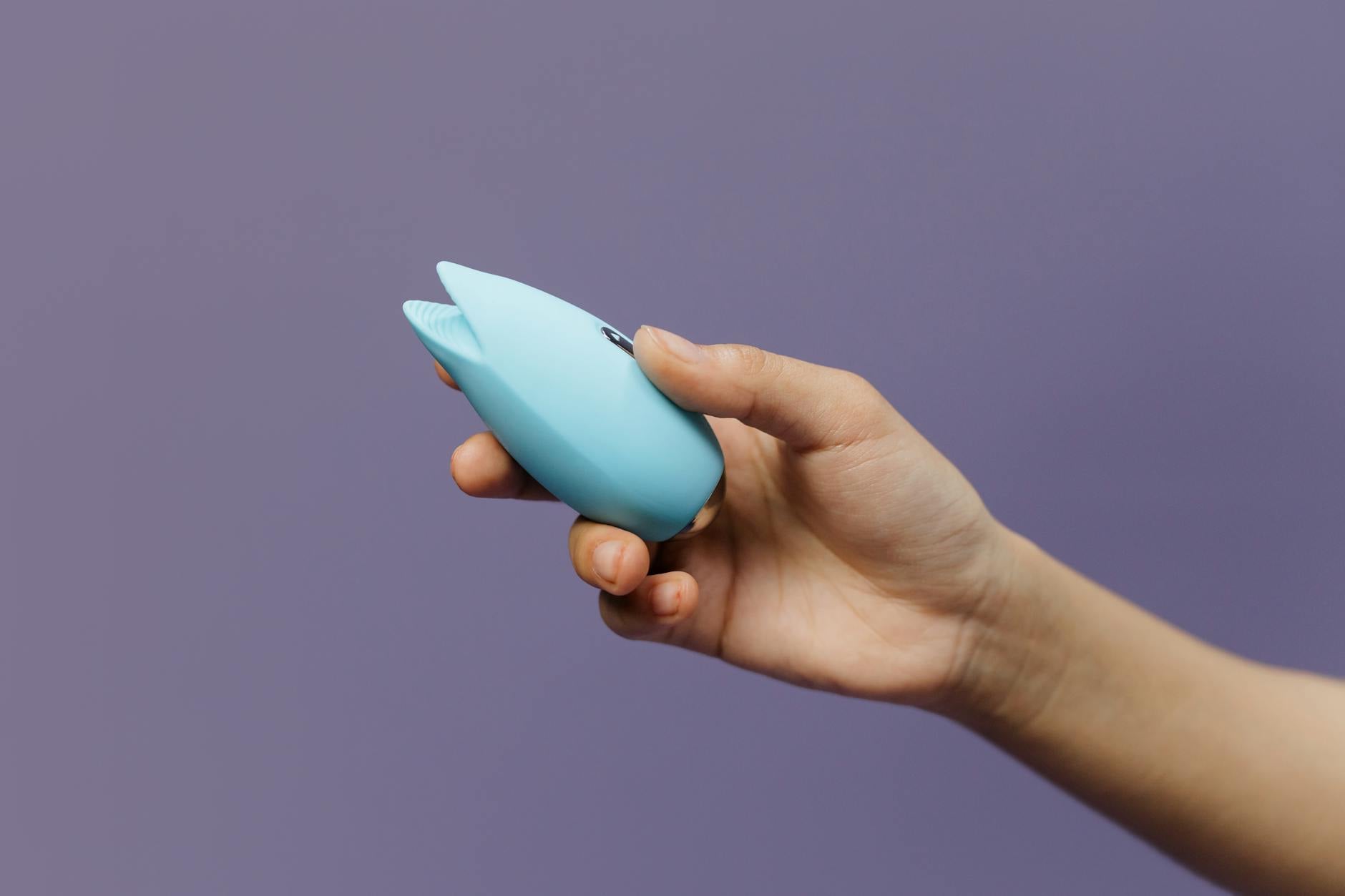
Here's the thing about traditional vibrators and sensitive clitorises
Most vibrators on the market work the same way. They buzz. The motor sits in the toy, the toy sits against your body, and stimulation happens through direct mechanical friction and vibration. For a lot of people, this feels amazing. For others, it feels like someone's running a sander over tissue that's already overworked.
If you've ever felt numb after using a traditional vibrator, or if the sensation goes from zero to overwhelming with no middle ground, you're not broken. You're probably just using the wrong technology for your body.
The difference between vibration and suction
Here's where lemon vibrators change the game. Instead of vibrating directly against your clitoris, they create a gentle suction that stimulates the nerve endings without the same mechanical pressure.
Think of it this way. A traditional vibrator is like tapping your arm really fast. Suction is like someone gently drawing the skin upward, creating a wave of stimulation. Both reach the same nerves. One does it through rapid movement. The other does it through pressure and release.
Your clitoris has roughly 8,000 nerve endings clustered in an area smaller than a pea. Direct vibration can overwhelm those nerves pretty quickly. Suction spreads the stimulation across a slightly larger area and uses a different type of nerve activation, which often feels less intense but somehow deeper.
Why this matters for sensitivity
When people say they're clitorally sensitive, they usually mean one of two things. Either the sensation gets uncomfortable fast, or they struggle to feel anything unless the pressure is very specific and strong. Lemon vibrators address both problems in ways traditional vibrators can't.
For folks with high sensitivity, suction lets you start at a much lower intensity level. A lemon clitoral vibrator like the Lem has five or six pressure settings. Most people start at levels one or two. With a traditional vibrator, you often don't have that range. You get low, medium, high. And low is still often too much.
For folks with reduced sensation, the opposite is true. Suction creates a more noticeable sensation with less vibration intensity. This sounds counterintuitive, but it's because the suction activates a different set of nerve pathways. You're not just getting vibration. You're getting rhythmic pressure and release, which your nervous system registers as distinct from plain buzzing.
The clitoris isn't a tiny penis
I say this gently, but most vibrator design assumes pleasure works the same way for everyone. They assume faster vibration equals better sensation. In reality, your clitoris responds to a whole range of stimuli that traditional design misses.
Your clitoris has an internal structure that extends several inches into your body. The visible part, the glans, is just the tip. When you use a suction vibrator, you're stimulating both the external glans and some of that internal tissue. Traditional vibrators mostly just buzz against the surface.
This is why people often report that orgasms from a lemon vibrator feel different. They're often deeper, more full-body, and sometimes easier to achieve multiple times in one session. You're accessing more of the anatomy with a single tool.
Pressure settings actually matter
I mention this because a lot of people think all vibrators have the same range. They don't. Traditional vibrators usually offer two or three real pressure levels. Lemon vibrators typically offer five or six, and the difference between level one and level two is noticeable.
This sounds like a small detail, but it's huge for folks with sensitivity variation. Maybe you're tender one day and numb the next. Maybe you like to start very gently and build. Maybe you change your mind halfway through. With five pressure options, you have way more control and flexibility.
You also avoid the frustration of "too weak" and "too much" being your only choices. There's actually a comfortable middle ground.
Why suction feels less numb
Here's something nobody talks about. When you use a traditional vibrator for long enough, the nerve endings adapt. They get used to the stimulation, and sensation drops off. You need more vibration to feel the same amount. Pretty soon you're at maximum intensity and feeling less than you did at medium intensity.
This is called sensory adaptation. It's a real thing. Your nervous system is protecting you from overstimulation by essentially turning down the volume.
Suction doesn't trigger this the same way because the stimulus is different. You're not getting continuous vibration. You're getting rhythmic suction and release. Your nerve endings don't adapt as quickly to a changing stimulus. This is why you can often use a lemon clitoral vibrator for longer and feel more throughout, not less.
The comfort factor
Let's also be honest. Traditional vibrators often hurt if you're sensitive. The vibration can make tissue sore, especially if you go longer than a few minutes. The soreness isn't always immediate. Sometimes you feel fine during and sore for days after.
This is because mechanical vibration can cause micro-trauma to tissue, especially tissue that's already tender. Suction doesn't work the same way. There's less potential for friction damage because you're not grinding a buzzing object against tissue.
If you've dealt with post-toy soreness before, switching to a lemon sucker vibrator is often the solution. You get more sensation, less discomfort, and faster recovery.
How to actually test this
If you're curious but skeptical, here's how to find out if a lemon vibrator will work better for you than what you're currently using.
Take whatever traditional vibrator you own and use it for three minutes at your normal pressure level. Notice how you feel. Rest for five minutes. Then try a different toy or switch to manual stimulation for a few minutes.
Now pay attention to sensitivity over the next 24 hours. Do you feel sore? Tender? Numb? Or fine?
That's your baseline. Then try a lemon clitoral vibrator at level two or three for five minutes and observe the same things. Most people notice less soreness and more sustained sensation with suction-based toys.
Not all lemon vibrators are created equal
I should mention this. There are knockoff suction vibrators out there. They work on the basic principle but miss important details. The motor might be too strong, causing that sander feeling I mentioned earlier. The seal might not be tight enough, so you get vibration without actual suction.
The Lem vibrator from Hello Nancy is engineered with this in mind. It has a gentler motor curve, a proper seal, and graduated pressure settings that actually matter. If you're trying a suction vibrator for the first time, that engineering detail matters.
The science you don't usually see
Studies on vibration and sexual response show that lower-frequency stimulation (1-10 Hz) actually activates more nerve types than high-frequency buzzing (50+ Hz, which is what most traditional vibrators do). Lemon vibrators typically operate in the 2-5 Hz range at lower settings, which means you're hitting more nerve types with less intensity.
This is why people with reduced sensation often have better luck with suction vibrators. You're not just going louder. You're going at a frequency your nervous system finds easier to process.
Why your body might prefer this
Your clitoris evolved to respond to a variety of stimulation types. Direct pressure, rhythmic motion, moisture, temperature change. Traditional vibrators only offer one type. Suction offers a hybrid. It combines pressure, rhythm, and gentle motion in a way that's closer to how human touch works.
This might sound like a small thing, but your nervous system notices. Many people find that switching to a lemon clitoral vibrator feels more like partnered pleasure than solo toy play. The sensation quality just hits different.
It's not about being broken
I want to circle back to this because it matters. If traditional vibrators have never felt right for you, you're not clitorally insensitive. You're not low-desire. You're not broken. You're probably just using a tool that's designed for a different nervous system than yours.
Sensitivity is a spectrum, and different stimulation methods work for different positions on that spectrum. A lemon vibrator expands what's available to you. It's not about compromising or settling. It's about finding the technology that actually fits your body.
The next step is simple
If this resonates, try one. Start at a low pressure setting. Give yourself five minutes to notice how different it feels. You might be surprised. A lot of people report that trying a suction vibrator is the first time they've actually felt comfortable with a toy, or the first time they've had consistent, reliable pleasure.
It's not magic. It's just better engineering for how your body actually works.
FAQ
How is a lemon vibrator different from a regular vibrator?
A lemon vibrator uses suction-based stimulation instead of direct vibration. Rather than a motor vibrating rapidly against tissue, the toy creates rhythmic suction that stimulates nerve endings through pressure and release. This gentler approach often feels less intense and causes less sensory adaptation, meaning you stay sensitive longer during use.
Can a lemon clitoral vibrator help if I get numb during sex?
Yes, often. Numbness during traditional vibrator use usually happens because the repetitive vibration triggers sensory adaptation. Suction provides a different type of stimulus that doesn't trigger the same adaptation as quickly. Many people find they can use a lemon vibrator longer without losing sensation.
Is the Lem vibrator actually better than other suction vibrators?
The Lem is specifically engineered with graduated pressure settings that make a real difference between levels, a seal that creates proper suction without pinching, and a motor curve that's gentler on sensitive tissue. Not all suction vibrators are designed this carefully. If you're trying suction for the first time, that engineering matters.
Will a lemon vibrator feel weird if I'm used to traditional vibrators?
Most likely yes, at first. The sensation is noticeably different. It usually takes two or three sessions to get used to how it feels. After that, a lot of people find they prefer it because the sensation feels fuller and less numb-inducing. Give yourself permission to need an adjustment period.
Can you use a lemon vibrator if you have very sensitive skin?
Yes, and in fact, suction vibrators are often gentler on sensitive skin than traditional vibrators. There's less friction, less grinding, and less potential for irritation. Just make sure you're using water-based lube and checking in with yourself about comfort during use.
How long can you safely use a lemon vibrator at one time?
Most people can use one for 10-20 minutes without discomfort, depending on pressure setting and personal sensitivity. If you're new to suction vibrators, start with five minutes and work up. If you feel sore or tender the next day, you probably went too long or too intense. Adjust down and try again next time.
The shift is real
Once you understand why lemon vibrators work differently, a lot of sexual frustration starts to make sense. You weren't broken. You just needed the right technology. That matters. Your pleasure matters. Finding the toy that actually works for your body is worth the small effort of trying something new.
If you have questions about which pressure setting to start with or how to use a clitoral vibrator comfortably, reach out. We're here to help you find what works.